






Supplying parts for classic Jaguars worldwide is a precise, high-stakes business. Many components haven’t been manufactured for decades, and traditional casting is expensive, slow, and impractical for low-volume production.
That’s why SNG Barratt turned to metal additive manufacturing – specifically Markforged Metal X – to reproduce an original OEM-spec bottle jack for the legendary Jaguar E-Type.
The burning question: would a 3D printed jack body be strong enough to safely lift a vintage sports car worth six figures?
To find out, SNG Barratt subjected the printed part to rigorous compression testing at an accredited lab. The test simulated real-world loads, ramping up to 95 kN (that’s over 9.5 metric tonnes).
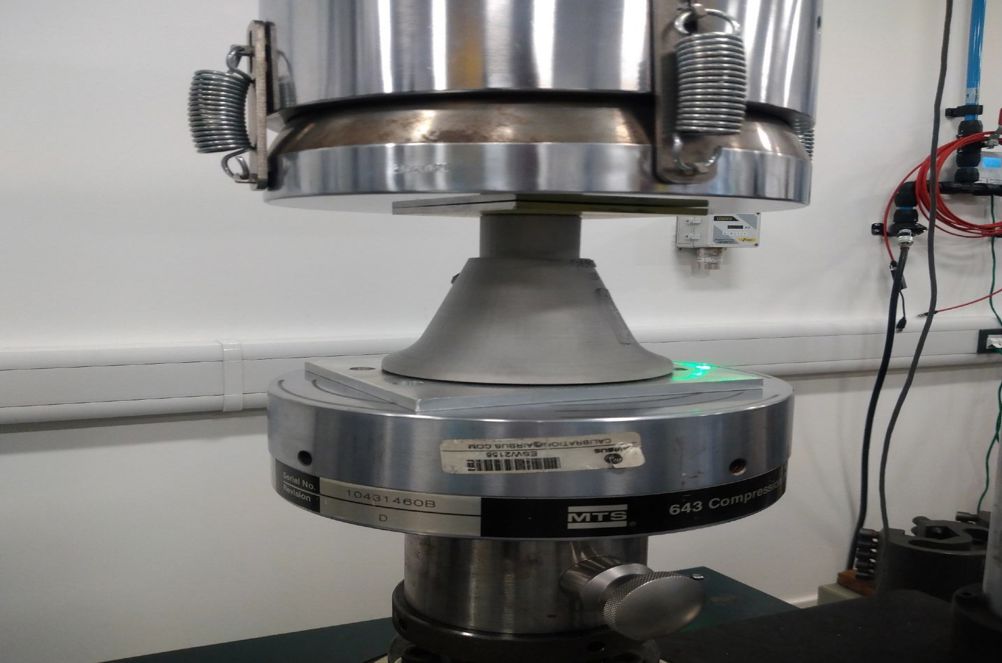
The original cast jack cracked and failed at 66.5 kN. The 3D printed version? It withstood the full load without a single sign of failure and is now a production part.
This isn’t just a proof of concept. SNG Barratt is already manufacturing a dozen end-use metal components in-house, alongside tooling inserts, jigs and fixtures, and hybrid press tools. The approach has slashed tooling costs by up to £10,000 per part and eliminated minimum order quantities that once tied up valuable cash.
By pairing engineering expertise with modern additive manufacturing, the team has not only matched the strength of traditional methods, they’ve beaten it.
Read the full case study and see the testing results here.


